Published on August 19, 2026
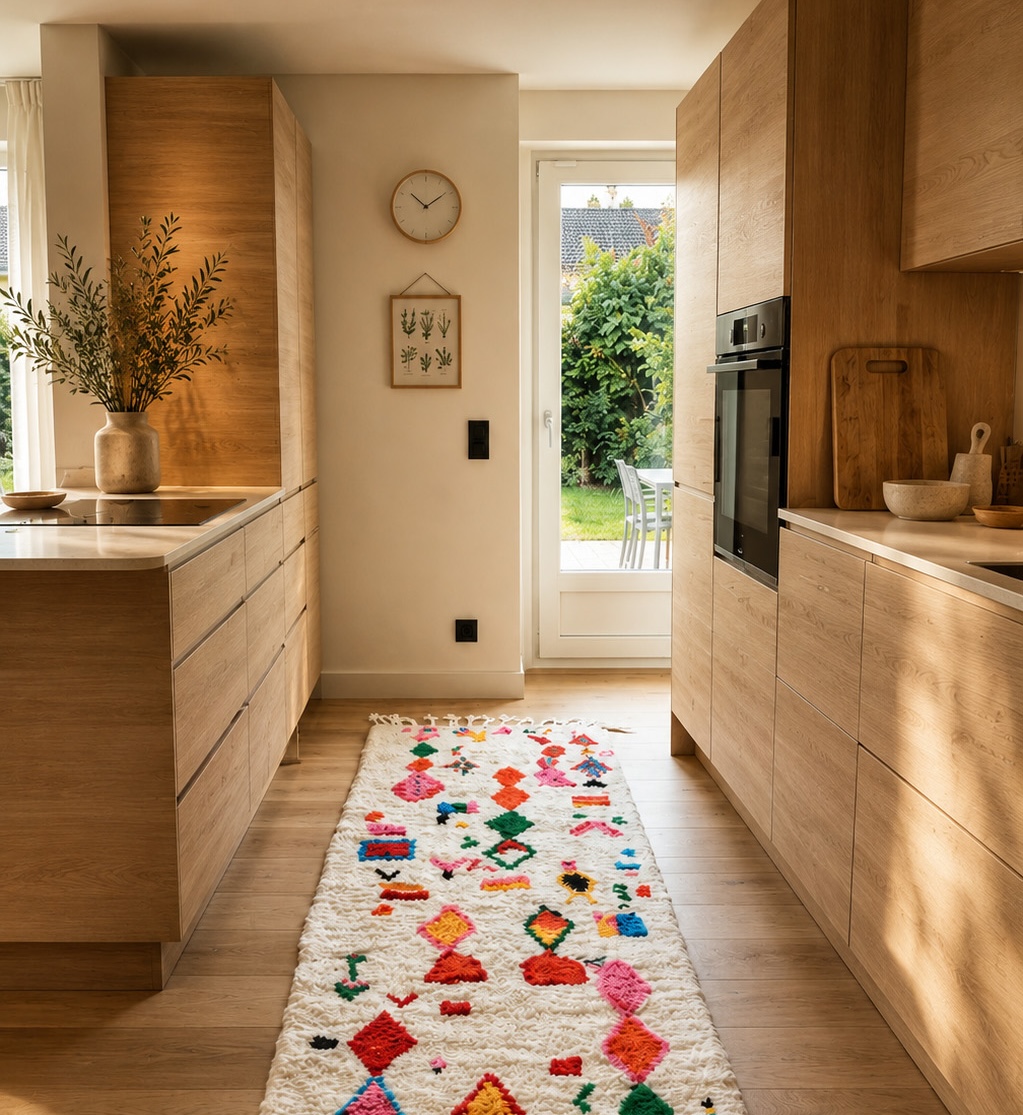
Berber rugs are often associated with living rooms and bedrooms, where their softness and authenticity create a warm atmosphere. However, more and more interior design enthusiasts are incorporating them into unexpected spaces like kitchens or bathrooms. But is it really a good idea? Do Berber rugs resist moisture, splashes, and frequent foot traffic? Discover the conditions under which it is possible to use a Berber rug in these spaces and what precautions to take to preserve its beauty.
The answer is yes, provided you choose the right location and follow certain rules. Contrary to popular belief, wool has natural properties that allow it to manage moisture better than many synthetic fibers.
Berber rugs are typically made from natural wool, a fiber that can absorb moisture from the air while remaining dry to the touch.
This property helps maintain a more comfortable environment and limits feelings of humidity.
Although wool is naturally resistant, a Berber rug should not be placed in an area where it regularly receives significant water splashes.
It is preferable to install it:
However, it is not recommended to place it directly at the exit of a walk-in shower or bathtub without suitable protection.
Good ventilation helps prevent moisture buildup in the fibers and helps preserve the rug in the long run. In a windowless or poorly ventilated bathroom, a rug specifically designed for damp areas will often be more suitable.

Yes, and it is even a trend that is increasingly common in contemporary interiors. Berber rugs bring visual warmth to a room often dominated by cold materials such as tiles, stone, or stainless steel.
In a kitchen, a Berber rug allows:
It is particularly appreciated in kitchens that are open to the living room or dining room.
Thanks to the presence of lanolin, a natural wax found in wool, maintaining a Berber rug is quite easy.
Although Berber rugs are sturdy, certain areas in the kitchen are less suitable:
It is preferable to prioritize traffic areas or dining zones.
Yes. Wool naturally absorbs ambient moisture while retaining its insulating properties. However, prolonged exposure to water should be avoided.
Yes, provided that the room is well ventilated and the carpet is not directly exposed to repeated water splashes.
Flat-woven Kilims and carpets are generally the most suitable due to their easy maintenance.
Yes. Wool naturally resists everyday dirt and regular maintenance helps maintain its appearance for many years.
Published on August 19, 2026
Berber rugs are often associated with living rooms and bedrooms, where their softness and authenticity create a warm atmosphere. However, more and more decoration enthusiasts are integrating them into unexpected spaces like kitchens or bathrooms. But is it really a good idea? Do Berber rugs resist humidity, splashes, and frequent traffic? Discover under what conditions it is possible to use a Berber rug in these spaces and what precautions to take to preserve its beauty.
The answer is yes, provided you choose the right location and follow certain rules. Contrary to popular belief, wool has natural properties that allow it to manage moisture better than many synthetic fibers.
Berber rugs are typically made from natural wool, a fiber that can absorb moisture from the air while remaining dry to the touch.
This property helps maintain a more comfortable environment and limits feelings of humidity.
Although wool is naturally resistant, a Berber rug should not be placed in an area where it regularly receives significant water splashes.
It is preferable to install it:
However, it is not recommended to place it directly at the exit of a walk-in shower or bathtub without suitable protection.
Good ventilation helps prevent moisture buildup in the fibers and helps preserve the rug in the long run. In a windowless or poorly ventilated bathroom, a rug specifically designed for damp areas will often be more suitable.

Yes, and it is even a trend that is increasingly common in contemporary interiors. Berber rugs bring visual warmth to a room often dominated by cold materials such as tiles, stone, or stainless steel.
In a kitchen, a Berber rug allows:
It is particularly appreciated in kitchens that are open to the living room or dining room.
Thanks to the presence of lanolin, a natural wax found in wool, maintaining a Berber rug is quite easy.
Although Berber rugs are sturdy, certain areas in the kitchen are less suitable:
It is preferable to prioritize traffic areas or dining zones.
Yes. Wool naturally absorbs ambient moisture while retaining its insulating properties. However, prolonged exposure to water should be avoided.
Yes, provided that the room is well ventilated and the carpet is not directly exposed to repeated water splashes.
Flat-woven Kilims and carpets are generally the most suitable due to their easy maintenance.
Yes. Wool naturally resists everyday dirt and regular maintenance helps maintain its appearance for many years.